 ☕️
☕️About Me
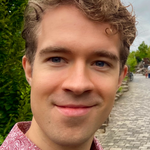
Hi there 👋! I am a PhD candidate at the Experimental Physics V of University of Würzburg. For my research, I focus on the physics and signal processing of magnetic resonance (MR) and computed tomography (CT) imaging.
The fusion of traditional physics with machine learning and differentiable programming to systematically improve the imaging process of both modalities is of special interest.
As an avid coder and technologist with a strong focus on Python 🐍, I love diving into emerging tools and frameworks to solve complex problems, automate workflows, and build scalable applications.
In my free time, when I’m not coding or tinkering with tech, I enjoy sports (volleyball and running), competing in virtual worlds and drinking a cup of coffee while contemplating life and things.
👨💻🏐🏃♂️👾
- Magnetic Resonance Imaging
- Computed Tomography Imaging
- {Machine, Deep} Learning
- Computer Vision
- Differentiable Programming
- Signal Processing
PhD Candidate Physics, since 2021
Julius-Maximilians-Universität Würzburg
Master of Science Physics
Julius-Maximilians-Universität Würzburg
Bachelor of Science Physics
Julius-Maximilians-Universität Würzburg
I am a PhD candidate in the Magnetic Resonance Imaging group (advised by Prof. Peter Jakob and Dr. Martin Blaimer at Experimental Physics V.
In my research I focus on the entire stack of imaging and vision problems. For the imaging methods I concern myself with magnetic resonance imaging (excite the spins in the object of interest and listen to the frequencies of the subsequent singing) and computed tomography (shoot the object with photons and measure what comes out the other end). For these two, it is often beneficial to optimize the imaging process and scanner device parameters with respect to certain target parameters. A certain target could e.g. maximal image sharpness for a certain budget of measurement time (typical for MRI) or a certain budget of radiation dose (typical for CT). For this programmatic optimization, we often use differentiable programming, sometimes also called backpropagation or autodiff, to simulate the forward imaging process and getting gradients nearly free 🎉 Also, learning the characteristics of the scanner into a digital twin model via machine learning is of interest.
Another center of attention of my work is quantitative MRI. The default imaging process in MRI is “qualitative”. This means that the grey values of the image the typical radiologist or medical practitioner is looking at is incommensurable. Images created with other scanners, other scanner settings
On top of simulating and improving the basal imaging process of MRI and CT, the subsequent processing and analysis of the - oftentimes threedimensional - image data is of interest.
For this, methods of computer vision and deep learning is of special interest.
Please reach out to collaborate 😃